Which CRM workflow does your practice need?
An independent practice may need relationship memory, opportunity tracking, project management or all three. Be explicit about which job is causing trouble. Losing the context of a former client is different from not knowing the value of proposals in flight.
A personal CRM is worth testing when you repeatedly reconstruct conversations from email and notes. A sales CRM may be more suitable when you need a shared pipeline, forecasting or formal handoffs. Project and accounting tools remain responsible for delivery plans, proposals and billing.
Broader tools such as folk position themselves around sales work. Compare that workflow honestly; consultants who sell retainers or work with a team may benefit from it. This guide does not rank a universal "best" CRM.
What should you track for clients, prospects and referrers?
Current and past clients
Keep the engagement context, what you delivered, relevant constraints and the last agreed next step. A past project can give you a useful reason to reconnect, but it does not imply the client has the same need or budget today.
Prospects
Retain the problem they described, what you have proposed and which question remains open. Record who owes the next action. "Interested" is too vague to tell you whether to send a document or wait for their decision.
Referral relationships
Keep shared interests, introductions and any action you owe. Do not turn the record into a scorecard of favors or assume an introduction was permission to add someone to a mailing list.
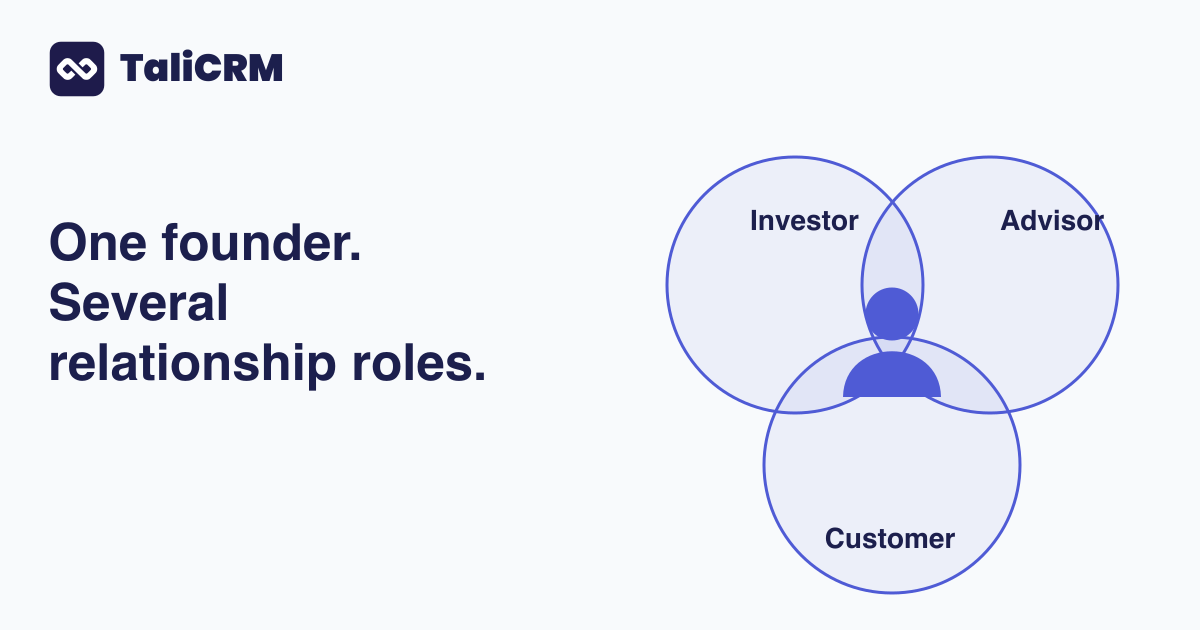
One person can be a client, referrer and peer. Keep the relationship history together rather than creating a new identity for every role.

What does a useful consultant contact record look like?
The record makes a future note specific without inventing a buying signal. It also separates completed work from an unfinished conversation. If the client shared confidential project information, retain only what you are authorized to keep in the system you chose.
TaliCRM supports contact capture and relationship notes. Start with a client you will speak with again, check the captured fields and add the context yourself. Before using its meeting recorders, check that your browser or Mac setup is supported and obtain appropriate participant consent. Review the processed notes and confirm or assign the contact in Meeting Inbox when needed.
Which system should own client notes, proposals and delivery?
Give each system a clear responsibility. Your relationship record should help you understand the person and the last conversation. The approved project workspace should hold delivery work. The system you use for commercial decisions should hold the current proposal or contract status. You may use one tool for several jobs, but make that choice deliberately.
| Information | Authoritative place |
|---|---|
| Relationship context | Your permitted contact record |
| Scope, deliverables and project decisions | The agreed project or client workspace |
| Proposal stage and commercial ownership | Your sales process, if you use one |
| Invoices and payments | Your accounting system |
| Confidential source materials | The storage approved for that engagement |
For a fictional example, Jordan asks you to shorten the pilot. Record the relationship-level next action, “Confirm revised pilot scope with Jordan,” and keep the detailed scope in the project workspace. Do not maintain two competing copies of the deliverables. A dated reference is more useful than an old scope pasted into a contact note.
Before a handoff, distinguish the person who introduced you, the day-to-day client and the person who can agree a change. Do not assume they are interchangeable. Keep sensitive judgments out of a general contact note and record only factual, relevant context you are authorized to store.
Which criteria should a consultant CRM pass?
| Test | What a useful result looks like |
|---|---|
| Capture | You can save the person and correct any mistaken field. |
| Retrieval | You can find the last decision and relevant context before a call. |
| Commitments | You can identify what remains open and who owns it. |
| Maintenance | You can keep the record current during a normal busy week. |
| Boundaries | The tool fits your permitted data, device and collaboration needs. |
Try the same person in your current system and the proposed tool. Use a real task such as retrieving a past project constraint. Compare the work you actually do, including review and correction, rather than relying on a polished capture demo.
If you already keep contacts in a workspace, compare the Notion maintenance and retrieval workflow before switching. A system you already use well may be the better fit.
How do you run a useful consultant CRM trial?
Choose an active client, a past client and a referral relationship. These are suggested test cases, not a minimum contact count. Each should expose a different question: what is due now, what matters from the last engagement, and what introduction or resource you owe.
For the active client, retrieve the last decision before a call and identify who owes the next action. For the past client, draft a relevant opening without assuming their priorities are unchanged. For the referrer, check what you agreed to share and whether everyone involved is comfortable with an introduction.
After the trial conversations, update the notes. Did the new record make it clearer what changed, or did it become another place to paste the same recap? Write down any friction while it is specific: missing context, ambiguous names, correction work or a task that could not be understood without reopening the whole meeting.
The personal CRM workflow for consultants in TaliCRM centers on keeping meeting context and chosen follow-ups with the relationship. Evaluate that narrower job first. It is not a promise to manage billing, deliver projects or generate referrals for you.
Check any required sharing, import or export capability before moving client records. Verify what your agreement permits you to store, including after an engagement ends. A successful product demo does not resolve those operating questions, and a trial with synthetic or permitted data can help you assess the workflow before adding sensitive information.
How do you run a weekly relationship review?
- Check the actions you promised and whether they were completed.
- Add missing context from the week’s relevant conversations.
- Review active prospect questions and decide whose turn it is.
- Choose a past-client or referral conversation only when there is a useful reason.
- Close, act on or revise the next task; avoid leaving vague obligations open.
This is a suggested routine, not a measured ten-minute outcome or an automated cadence engine. Review a manageable set first. If the same note appears every week without a reason to act, close it or explain what future event will make it relevant.
Use an owner-and-action check for meeting commitments and a short brief before a repeat call. These are practical uses of the record, rather than additional databases to maintain.
How should you start without disrupting your practice?
You do not need to migrate every old contact or abandon a sales or project tool. Add a small number of active relationships and evaluate whether the context is easier to retrieve. Verify any required import, export or integration capability before treating it as part of a migration plan.
Check current limits and plans directly. This guide does not promise a free tier, saved hours, increased referrals or new revenue. Its test is narrower: can you walk into your next client conversation with an accurate record and a clear next step?
What do consultants ask before choosing a personal CRM?
What is the best personal CRM for consultants?
The useful choice is the one that passes your client-context, retrieval and follow-through tests. A list of features cannot establish that for every practice. Compare the same tasks in your current system and the candidate tool, then check cost and operational requirements directly.
Do independent consultants need a sales CRM?
Sometimes. If your main problem is tracking proposals, stages and ownership, evaluate a sales CRM. If it is recalling past discussions and keeping promises across clients and peers, a personal CRM may be a better starting point. You can need both jobs covered.
Can a CRM replace project management or accounting?
Do not assume so. Keep delivery commitments, scope changes and financial records in the systems responsible for them. The contact note should point you toward the right context without creating a conflicting source of truth.
How should you keep in touch with past clients?
Use a relevant reason grounded in the prior work, such as an agreed review or a resource they requested. Check that their situation is still current. A past engagement is context, not evidence of a new budget or permission for repeated pitches.